Stomp, Connect, Go Viral: How Dabke Became Gen Z's Most Unexpected Dance Obsession
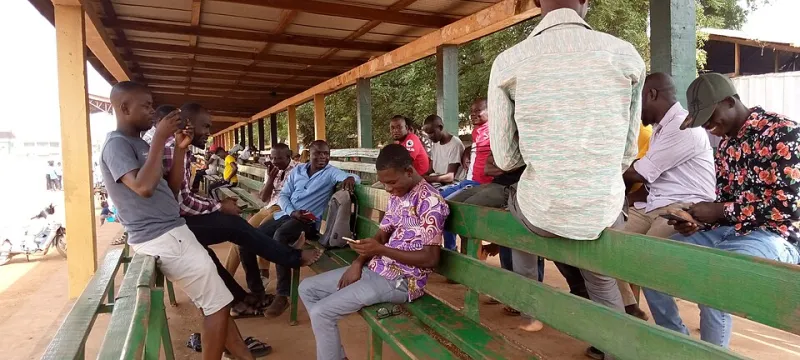
Photo: Stephany5757, CC BY-SA 4.0, via Wikimedia Commons
If you've been anywhere near TikTok or Instagram Reels in the past couple of years, you've probably seen it — a line of people, shoulders locked, feet stomping in tight rhythmic unison, moving with an energy that feels both ancient and completely of this moment. That's dabke. And right now, it's everywhere.
What started as a wedding staple and community celebration across Lebanon, Palestine, Syria, Jordan, and Iraq has quietly evolved into one of the most compelling crossover dance trends in American youth culture. Gen Z creators — Arab-American and otherwise — are taking this centuries-old folk tradition and putting it in conversation with modern music, streetwear aesthetics, and the fast-moving language of short-form video. The result is something genuinely exciting: a cultural bridge built one stomp at a time.
What Even Is Dabke?
Before we get into the TikTok era, it helps to understand what dabke actually is and why it carries so much weight. The word itself roughly translates to "stomping of the feet" in Arabic, and that's a pretty accurate description. Traditionally performed at weddings, festivals, and communal celebrations throughout the Levant region, dabke is a line dance where participants link arms or hold hands and move in synchronized patterns — heavy footwork, shoulder rolls, and a lead dancer (the lawweeh) who improvises at the front of the line.
It's not just a dance. For generations of Levantine families, dabke is a living thread connecting them to their land, their ancestors, and each other. Palestinian communities in particular have embraced it as a symbol of cultural identity and resilience. When you see dabke at a gathering, you're watching something that carries real historical and emotional weight — and that depth is exactly what's making it resonate with young people who are hungry for authenticity.
The TikTok Pipeline
So how did a folk dance from the Eastern Mediterranean end up on the For You pages of teenagers in Ohio and Texas? Honestly, it started with Arab-American creators just doing what they've always done — bringing their culture to the party.
Creators like those from Palestinian, Lebanese, and Syrian diaspora communities began posting dabke videos that weren't your grandmother's wedding footage. They were setting traditional footwork to Drake, to Afrobeats, to hyperpop. They were doing dabke in Jordans and hoodies. They were teaching the basic steps in 60-second tutorials with on-screen captions. And people — lots of people who had never heard the word dabke before — were obsessed.
The format works almost suspiciously well for short-form video. The synchronized group movement creates visual satisfying patterns. The stomping provides a natural percussive element that hits hard even through a phone speaker. And the line structure means you can film it from multiple angles and still capture the full energy. It's practically made for the algorithm.
More Than a Trend — It's a Reclamation
Here's where it gets interesting, though. For Arab-American Gen Z, the viral spread of dabke isn't just a flex — it's a reclamation. Many young people from Levantine backgrounds grew up watching their parents and grandparents do dabke at family events while feeling a little awkward about it in public, caught between wanting to fit in and wanting to hold onto something real.
The internet changed that calculus entirely. When you can post a video of yourself doing dabke and watch it rack up hundreds of thousands of views from people who think it's the coolest thing they've ever seen, suddenly that thing you were maybe a little embarrassed about at school becomes your biggest cultural asset.
"My dad taught me the basic steps when I was like eight," one Lebanese-American college student in Dearborn, Michigan explained in a widely shared video. "I never thought I'd be teaching it to my non-Arab friends in a parking lot, but here we are." The comments section was flooded with people asking for tutorials.
This kind of moment — the diaspora kid becoming the cultural authority rather than the outsider — is showing up all over the platform. And it's shifting something real in how Arab-American young people relate to their own heritage.
When Remixing Respects the Roots
Not every cultural mashup lands gracefully, and dabke's viral moment hasn't been without some complicated conversations. When non-Arab creators started picking up the steps without much context — sometimes crediting the dance vaguely as a "Middle Eastern thing" or not at all — Arab-American creators were quick to speak up. Politely but firmly, they flooded comment sections with history lessons, cultural context, and gentle corrections.
What's notable is how that pushback mostly worked. Unlike some other cultural borrowing debates online, the dabke conversation has generally trended toward education rather than outrage. Arab-American creators have been proactive about making the history accessible and inviting rather than gatekeeping. The message has largely been: come stomp with us, just know what you're stomping for.
That approach has actually deepened the trend rather than shutting it down. Non-Arab creators who learned the context often became some of the most enthusiastic ambassadors, explicitly crediting the Levantine origins in their posts and directing followers toward Arab-American creators who were doing it right.
Dabke Goes IRL
The digital momentum has spilled into real-world spaces in some genuinely cool ways. Arab cultural organizations at universities across the US — from Michigan to California to Texas — have reported surging interest in dabke workshops and performance groups. Events that used to draw a mostly Arab-American crowd are now pulling in students from all kinds of backgrounds who learned about the dance through social media.
In cities with large Arab-American communities like Dearborn, Chicago, and Houston, dabke flash mobs and pop-up performances have become a thing — part celebration, part cultural statement, fully photogenic. Some of these events have been organized specifically as responses to political moments affecting the Arab world, reclaiming dabke's long history as an act of communal solidarity.
There are also a handful of professional dabke troupes that have seen their bookings and social followings grow significantly, getting invited to perform at venues and events that wouldn't have considered them a few years ago.
Why This One Hits Different
America has watched a lot of dances go viral. The Macarena. The Harlem Shake. The Renegade. Most of them are here one month and gone the next. Dabke feels different, and the reason might be exactly what makes it hard to reduce to a trend: it's fundamentally communal.
You can't really do dabke alone. The whole point is the line, the linked shoulders, the shared rhythm. In an era when Gen Z is constantly talking about loneliness, disconnection, and the hollow feeling of parasocial relationships, a dance that literally requires you to hold onto the person next to you and move together hits something deeper than choreography.
That's the dabke effect. It's not just a cool set of moves — it's a reminder that some of the most powerful things humans have ever created are the ones we can only do together.
And right now, a whole generation of young Americans is learning that lesson through the soles of their feet.