Love, Inshallah: How Arab-Americans Are Building Relationships on Their Own Terms
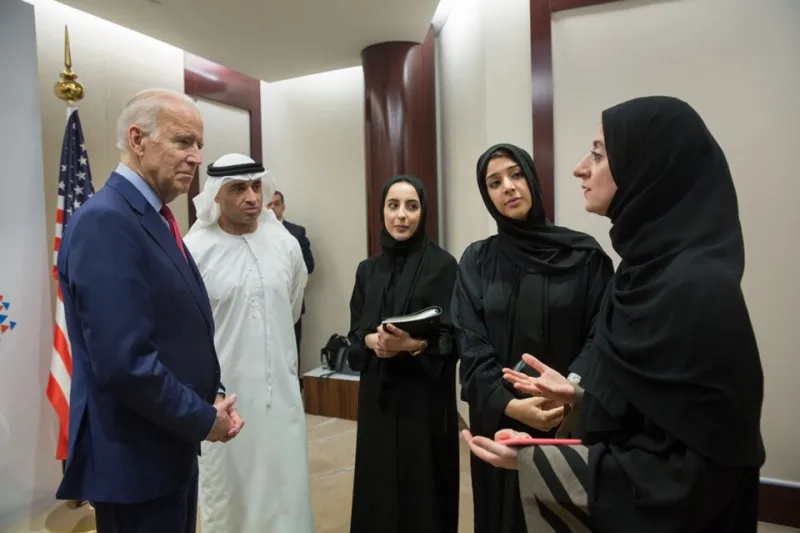
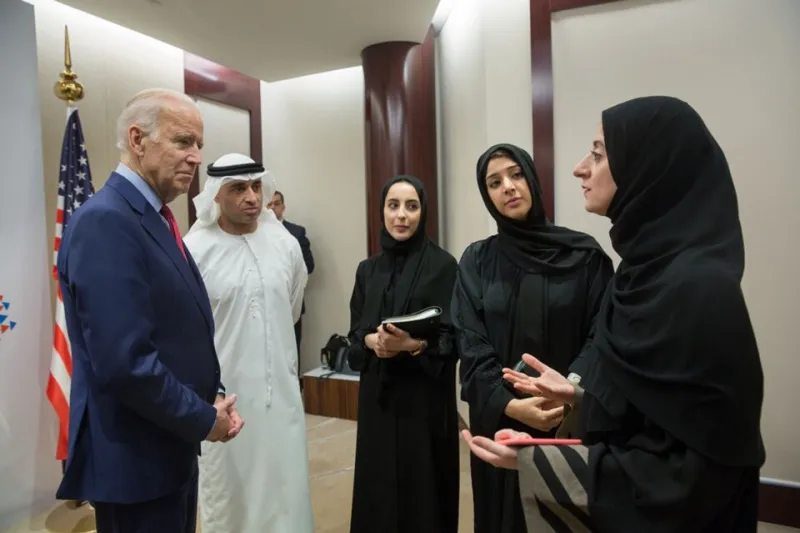
Photo: David Lienemann, Public domain, via Wikimedia Commons
Let's be honest: dating is already complicated. Add a layer of cultural expectations, a family group chat that never sleeps, and the quiet weight of community opinion, and you've got a situation that most Arab-Americans know intimately. But something is shifting. Across the country, Arab-American Gen Zers and millennials are rewriting what romance looks like — not by rejecting their roots, but by weaving their own thread through them.
The Setup Nobody Prepared You For
Grow up Arab-American and you'll likely absorb two completely different scripts about love. One comes from your parents' world — where marriage is a family affair, compatibility is measured in values and lineage, and dating, if it happens at all, happens quietly or not at all. The other script is everywhere else: your college campus, your Netflix queue, your friends' Instagram stories. It's casual, exploratory, and very much in the open.
Navigating both? That's the real relationship challenge nobody talks about.
"I didn't even have a word for what I was doing for most of my twenties," says Lara, a 29-year-old Lebanese-American from Dearborn, Michigan. "I was dating, but I couldn't call it that at home. I was looking for a partner, but not in the way my mom envisioned. I was just... figuring it out, quietly."
That quiet figuring-out is happening loudly now — on social media, in therapy offices, and in conversations between friends who finally feel safe enough to say: this is hard, and it's okay that it's hard.
Swipe Right on the Culture Clash
Apps like Hinge and Bumble weren't exactly designed with Arab-American dating dynamics in mind. But that hasn't stopped an entire generation from using them — creatively. Some Arab-Americans use dating apps specifically to meet people outside the community, craving a relationship free from the pressure of shared cultural expectations. Others use them to find fellow Arab-Americans, hoping for someone who just gets it without needing a three-hour explanation of why you can't just "bring them home" after two dates.
There's also a growing niche of Muslim-focused apps like Muzz (formerly Muzmatch) and Salams, which try to bridge the gap — offering a space where faith and intention are part of the profile. For Arab-Americans who are observant, these platforms offer something mainstream apps don't: a built-in understanding of boundaries.
"I tried Hinge for a while and kept having to explain so much," says Omar, a 26-year-old Egyptian-American from Houston. "With Muzz, at least people already know why I'm not trying to hook up on the first date. It removes a whole conversation."
But apps are just one piece of a much bigger puzzle.
Rewriting the Blueprint
For many Arab-Americans, the bigger work isn't finding a partner — it's deciding what kind of relationship they actually want, independent of what they've been told to want.
Some are choosing partners outside the Arab or Muslim community entirely, navigating the complicated emotional terrain of bringing home someone their family didn't picture. Others are taking the more traditional path but insisting on choosing that path themselves — not because it was handed to them, but because it genuinely reflects their values.
Rana, a 31-year-old Palestinian-American from Chicago, ended up marrying someone her family approved of. But the road there looked nothing like her parents expected. "I dated other people first. I had my heart broken. I figured out what I actually needed in a partner. And then I met my husband — and yes, my family loves him — but I chose him. That distinction matters to me more than I can explain."
That sense of agency — the feeling of authorship over your own love story — is what keeps coming up in these conversations. It's not about rebellion. It's about ownership.
The Family Variable
Here's the thing about Arab-American families: they're not a monolith, and neither are their expectations. Some families are genuinely open, supportive, and willing to evolve. Others are more rigid. Many fall somewhere in the messy, loving middle — where they want you to be happy but also want you to be happy in a specific way.
For Arab-Americans who are queer, the stakes around family and relationships can be even higher, often involving a whole separate layer of identity navigation that deserves its own deep conversation.
But even within straight, secular contexts, the family variable is real. "My parents say they want me to be happy, and I believe them," says Ziad, a 28-year-old Jordanian-American from Los Angeles. "But their version of happy and my version of happy don't always look the same. I'm working on closing that gap — with them, not against them."
That framing — working with family rather than running from them — is surprisingly common among Arab-Americans who are redefining romance. There's a deep desire to maintain connection, to honor the love that exists in these family structures, even while pushing back on the parts that feel limiting.
New Traditions in the Making
What's emerging isn't a rejection of Arab culture — it's a remix. Arab-Americans are holding onto the parts of their heritage that feel meaningful: the emphasis on commitment, the value of family involvement, the weight given to loyalty and long-term partnership. And they're letting go of the parts that no longer fit: the secrecy, the shame, the idea that love is something to be arranged rather than discovered.
Some are having honest conversations with their parents earlier than previous generations would have dared. Some are bringing partners home sooner. Some are taking longer — intentionally — because they refuse to rush something as significant as a life partnership just to ease family anxiety.
"I think my generation is doing something really brave," says Lara. "We're not throwing away our culture. We're asking it to grow with us. That's actually a form of respect."
The Bigger Picture
What Arab-Americans are working through around dating and relationships isn't unique to them — immigrant and diaspora communities across the board face versions of this tension. But the specific texture of the Arab-American experience, shaped by religion, regional diversity, family structure, and the particular way Arab culture has been portrayed (and misrepresented) in American media, gives it its own distinct flavor.
And increasingly, that flavor is being shared openly — in podcasts, in TikTok videos, in honest Instagram captions, and in conversations between friends who grew up code-switching their love lives.
The diaspora dating game is complicated. But Arab-Americans are playing it with more confidence, more self-awareness, and more joy than ever before. And that, more than any rulebook, feels like progress.