Covered and Unbothered: How Arab-American Women Are Owning the Hijab Conversation
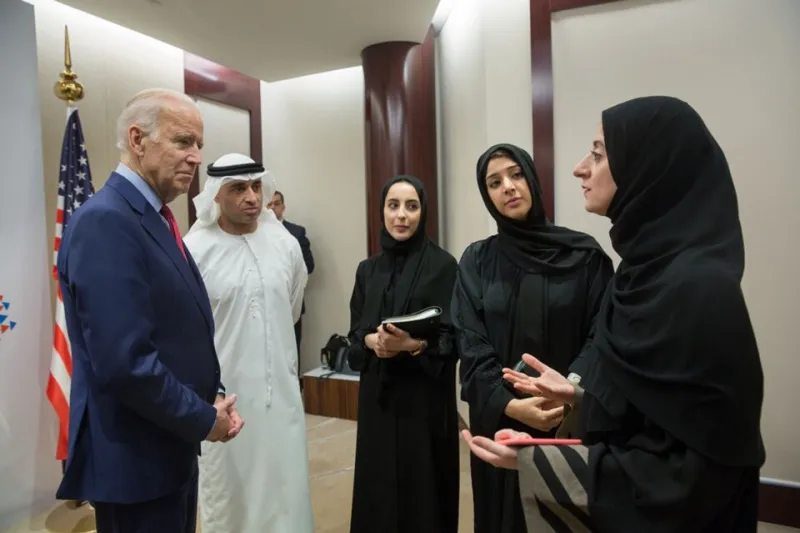
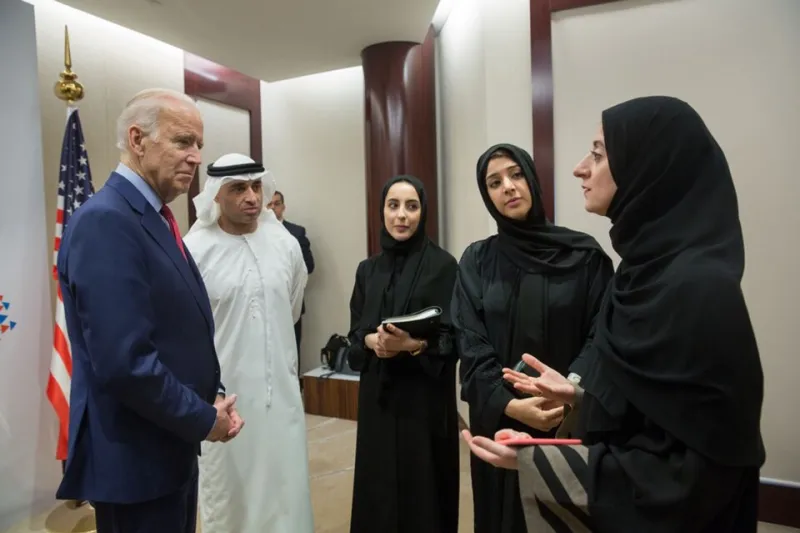
Photo: David Lienemann, Public domain, via Wikimedia Commons
Let's get one thing straight: the hijab does not need saving. Not by Western feminists who treat it as a symbol of oppression, and not by religious gatekeepers who think they get to dictate how it's worn. The women who wear it? They've got it handled — and they're increasingly done letting anyone else narrate their story.
Across the United States, a growing wave of Arab-American women is reclaiming the hijab conversation on their own terms. They're building fashion brands, racking up followers on Instagram and TikTok, and having deeply personal, sometimes complicated conversations about faith, identity, and what it means to move through American life while visibly Muslim. It's not a monolith. It never was. But right now, it's louder, more visible, and more confident than ever.
The Noise They're Drowning Out
Growing up Arab-American often means getting used to being a talking point. Post-9/11 America made the hijab a political object almost overnight — something to debate on cable news, to legislate over, to project fears onto. For many young hijabi women, navigating childhood and adolescence in the U.S. meant fielding questions that had nothing to do with who they actually were.
"People would ask me if I was forced to wear it before they even asked my name," says Nadia, a 26-year-old content creator based in Dearborn, Michigan. "Like that was the most interesting thing about me. It took me years to realize I didn't owe anyone that explanation."
That exhaustion — of being reduced to a single piece of fabric — is something many hijabi women across the country recognize instantly. But where previous generations often felt pressure to either defend or justify their choice, younger Arab-American women are largely opting out of that dynamic altogether. The explanation era, for many of them, is over.
Faith, Choice, and the Space Between
What makes this moment genuinely interesting is how diverse the motivations and experiences actually are. For some women, wearing hijab is a deeply spiritual practice — a daily act of devotion that feels inseparable from their identity. For others, it's a cultural inheritance they've chosen to embrace on their own timeline. And for some, it's an ongoing negotiation — worn some days, not others, reconsidered as life changes.
Dina Abdelhamid, a 31-year-old based in Houston who started wearing hijab in her mid-twenties, describes her choice as something that came from within rather than from external pressure. "I didn't grow up wearing it. My mom doesn't wear it. It was completely my decision, and that's actually something people don't expect to hear," she says. "They assume it's always a family thing, a community thing. For me it was personal. It still is."
That complexity — the spectrum of experience that exists under one word — is exactly what gets flattened when the conversation is driven by people outside the community. The women living it know it's never just one thing.
When Modest Fashion Became a Movement
If there's one arena where Arab-American hijabi women have made an undeniable mark, it's fashion. The modest fashion industry has exploded over the past decade, and American Muslim women have been central to that growth. From indie brands out of New Jersey and California to major retailers finally stocking hijab-friendly lines, the market has woken up to a consumer base it ignored for far too long.
Creators like Habiba Da Silva and a generation of U.S.-based hijabi influencers have demonstrated that modesty and style are not in tension — they're a creative challenge that produces some genuinely stunning results. Layering, color-blocking, draping, texture play — hijabi fashion has developed its own visual language, one that borrows from Arab heritage while being fully fluent in contemporary American aesthetics.
"I think people underestimate how much creativity goes into dressing modestly," says Layla, a 24-year-old fashion design student in New York. "You're working within parameters, sure. But constraints push you to be more inventive. Some of the most interesting styling I see online is coming from hijabi creators."
Small businesses run by Arab-American women — selling everything from silk underscarves to tailored abayas designed for the American workplace — have found loyal audiences through social media, building communities around shared aesthetics and shared experience.
The Pushback from Within
Here's the part of the conversation that often gets skipped: the tension isn't only coming from outside the community. Young Arab-American women who wear hijab in ways that feel expressive or fashion-forward sometimes face criticism from more conservative corners of their own communities — accusations that they're not wearing it "correctly," or that mixing hijab with certain styles undermines its religious meaning.
It's a friction point that many women navigate quietly, and it speaks to how loaded a single garment can become when it sits at the intersection of religion, culture, and identity.
"There's this idea that if you're making hijab look too cute, too trendy, you're somehow disrespecting it," Nadia says. "But I think that's a really narrow way of looking at it. My intention is between me and God. The way I style my scarf doesn't change that."
For many young women, the goal isn't to satisfy either camp — not the Western observer who assumes oppression, and not the community voice that polices expression. It's to live authentically inside a faith and identity that belongs to them.
Visibility as a Political Act
In an America where anti-Muslim sentiment has spiked and dipped in cycles for over two decades, simply being visibly Muslim in public is, whether you want it to be or not, a kind of statement. Hijabi women navigate this reality every day — in airports, in job interviews, in classrooms, in grocery stores.
And yet, the women we spoke to weren't interested in framing their lives primarily through the lens of struggle. They're building businesses, creating content, pursuing careers, raising families, and yes, figuring out which earrings work best with their wrap style of the week. The full, textured, ordinary-extraordinary reality of their lives is the point.
"I want people to see me and just see a person," Dina says. "A person who happens to wear hijab. Not a symbol. Not a debate. Just a person."
That, more than anything, might be the clearest signal of where this generation stands. They're not asking for the conversation to go away. They're just insisting on being the ones who lead it.