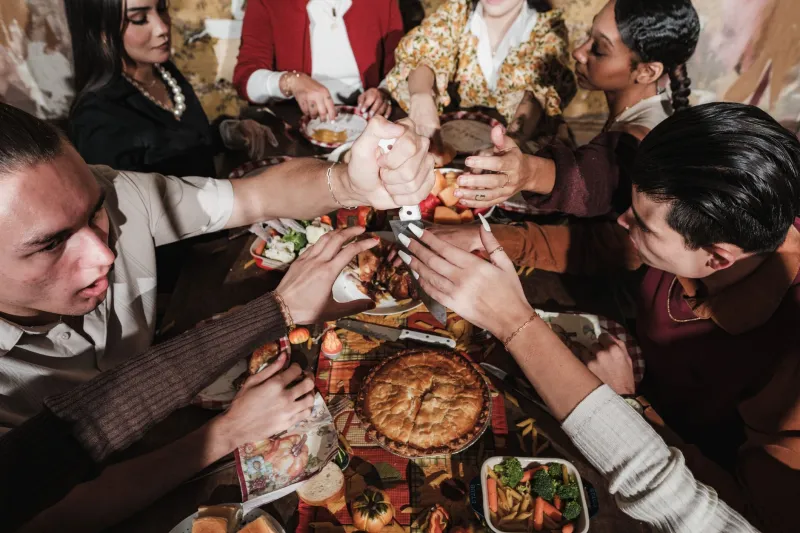
Habibi, We Need to Talk: How Arab-American Gen Z Is Dismantling the Mental Health Taboo at Home
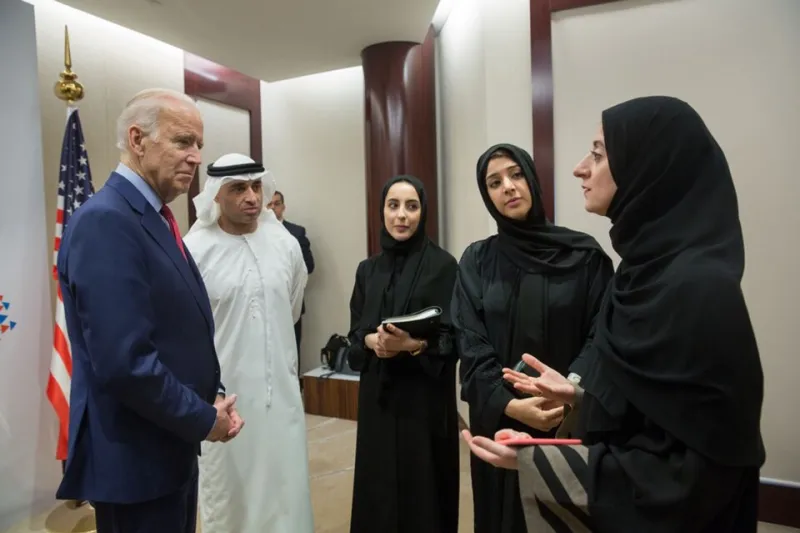
Photo: David Lienemann, Public domain, via Wikimedia Commons
There's a phrase a lot of Arab Americans grew up hearing whenever they tried to express that something felt off — emotionally, mentally, existentially. It usually went something like: "What do you have to be sad about? We sacrificed everything for you." Or maybe it was a quieter dismissal, a subject changed so fast you started to wonder if you'd imagined bringing it up at all.
For decades, mental health was treated like a dirty word in many Arab-American households. Therapy was for people who couldn't handle their problems. Anxiety was weakness. Depression? That wasn't even a concept that translated cleanly into Arabic — at least not in the way most families talked about it around the dinner table.
But something is changing. Quietly, then all at once.
The Weight of "We Don't Talk About That"
Laith Khalil, a 24-year-old Palestinian American from Dearborn, Michigan, remembers the first time he tried to tell his mom he was struggling. He was nineteen, in his second year of college, barely sleeping and barely functioning. Her response, delivered with genuine love and zero malice, was to ask if he'd eaten enough that day.
"It wasn't that she didn't care," he says. "She just didn't have the language for it. Her generation survived actual war. They don't have a frame of reference for 'I'm anxious about nothing in particular.'"
That disconnect — between lived trauma and the language to name it — sits at the center of a generational conversation Arab Americans are now forcing into the open. And the people driving it aren't therapists or community organizations, at least not primarily. They're twenty-somethings with TikTok accounts, group chats, and a refusal to keep performing okayness for the sake of family harmony.
Therapists on the Front Lines
Dr. Nadia Haddad, a licensed clinical psychologist based in Los Angeles who works primarily with Arab and Muslim American clients, has watched the shift in real time over the past five years. Her waitlist has doubled. Her youngest clients are increasingly coming in not because a crisis forced them to, but because they proactively sought help after seeing someone they follow online talk about their own therapy journey.
"There used to be so much shame attached to even making an appointment," she says. "Now I have clients who told their whole family they're in therapy. That would have been unthinkable ten years ago."
She's also seeing something she finds genuinely moving: adult children bringing their parents in. Not for family therapy in the traditional sense, but almost as a form of translation — helping parents understand what their kids are experiencing through a lens that doesn't strip away faith or culture.
"A lot of Arab parents aren't resistant because they don't love their kids," Dr. Haddad explains. "They're resistant because they don't understand what therapy even is. They think it means you're broken, or that you're going to blame them for everything. When we reframe it as building tools, as strengthening yourself — that resonates a lot more."
The Instagram Therapists and the TikTok Truth-Tellers
If Dr. Haddad represents the clinical side of this shift, then creators like Yasmine El-Sayed represent the cultural one. A second-generation Egyptian American from New Jersey, Yasmine started posting about her anxiety on Instagram three years ago mostly as a personal outlet. She expected crickets. She got thousands of DMs from Arab Americans who said they'd never seen their experience reflected back at them so plainly.
"People kept saying, 'I thought it was just me,'" she recalls. "That's the thing about growing up in a community that doesn't talk about this stuff — you feel completely alone in it."
Her content now blends humor with vulnerability in a way that feels distinctly Arab American — she'll open a reel with a joke about her teta's cooking and close it with something genuinely raw about navigating depression while trying to honor your family's expectations. It's a tone that lands because it doesn't ask Arab Americans to choose between their identity and their mental health.
She's part of a broader wave of Arab and Arab-American creators — many of them women, many of them Muslim — who are using social media to do the kind of psychoeducation that community centers and mosques have historically been slow to take on.
When Faith and Therapy Finally Sit at the Same Table
One of the most persistent barriers to mental health care in Arab-American communities has been the perceived conflict between seeking professional help and leaning on faith. The idea that prayer should be sufficient — that turning to a therapist signals a lack of trust in God — has kept a lot of people from getting support they genuinely needed.
But that framing is being challenged too, and increasingly from within religious spaces themselves. Some imams and community leaders are actively partnering with mental health professionals, hosting workshops at mosques, and making explicit the point that caring for your mental health is an act of stewardship over a gift from God — not a rejection of faith.
Rana Aziz, a community organizer in Houston who helped launch a mental wellness initiative at her local Islamic center, says the response has been overwhelming. "We had eighty people show up to our first event. Half of them had never talked to anyone about this stuff before. They just needed permission."
That word — permission — comes up a lot in these conversations. Permission to struggle. Permission to ask for help. Permission to say, out loud, that you're not okay.
A Conversation That's Just Getting Started
None of this means the stigma has vanished. It hasn't. There are still plenty of Arab-American households where therapy is whispered about, where mental health struggles are attributed to weak faith or insufficient gratitude, where the family's reputation feels more fragile than any one person's wellbeing.
But the trajectory is real. And the young Arab Americans pushing this conversation forward aren't doing it by rejecting their culture — they're doing it by insisting their culture has room for them, all of them, including the parts that hurt.
Laith, for his part, eventually found a therapist through a college resource program. His mom still isn't totally sure what to make of it. But last Thanksgiving, when he mentioned offhandedly that his sessions had been helping, she didn't change the subject.
"She asked me what we talk about," he says, still sounding a little surprised by it. "That was huge. That was everything."
Sometimes the conversation starts with one question nobody expected to get asked. And sometimes that's enough.