Between Couch and Culture: How Arab-American Therapists Are Rewriting the Rules of Mental Wellness
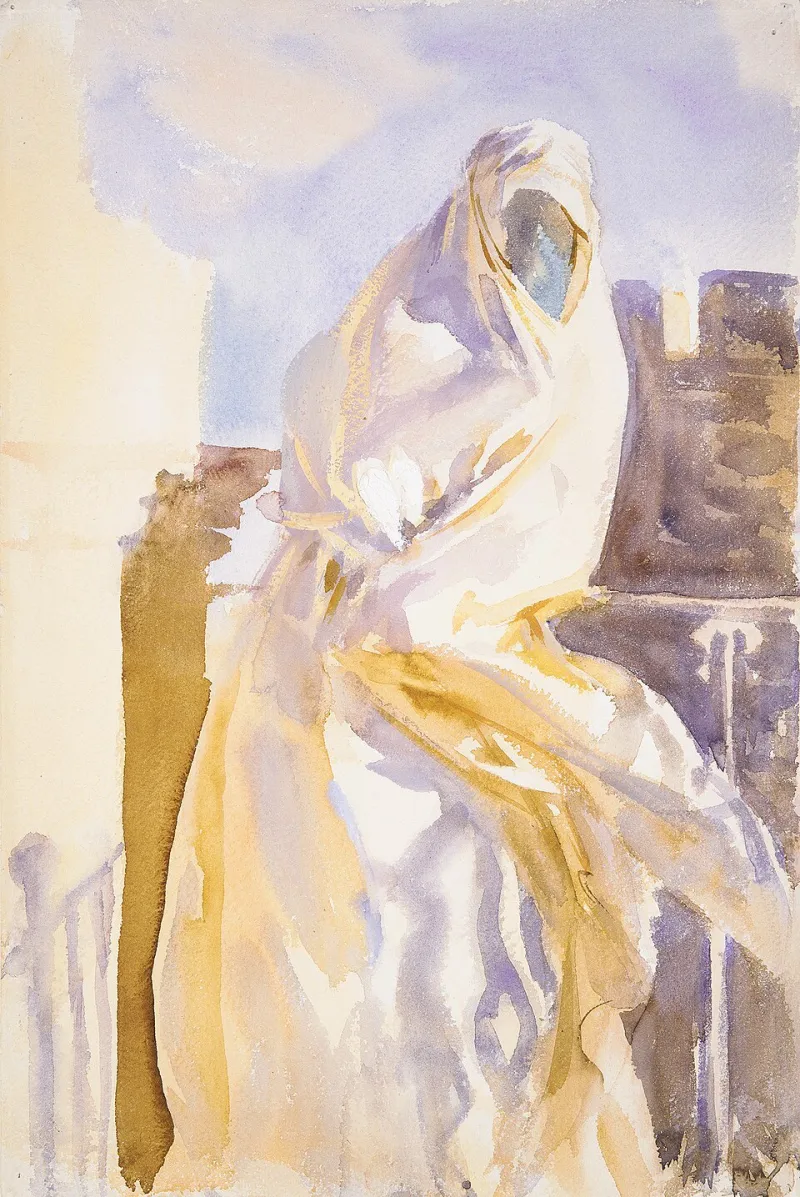
Photo: John Singer Sargent, CC0, via Wikimedia Commons
There's a phrase a lot of Arab Americans grew up hearing whenever things got heavy at home: "Hada shughul bayt" — this is family business. Keep it inside. Pray about it. Move on. For decades, that unspoken rule kept a lot of pain locked behind closed doors. But something is shifting, and the people leading that change aren't just advocates or influencers — they're licensed therapists with clipboards, waiting rooms, and a deep understanding of exactly where you're coming from.
Across the US, a growing cohort of Arab-American mental health professionals is building practices that don't ask clients to check their culture at the door. Instead, they're doing the harder, more nuanced work of weaving Arab values — family loyalty, community interdependence, spiritual identity — directly into evidence-based therapeutic frameworks. The result? A model of care that feels, for many clients, like the first time someone in a professional setting has truly understood them.
The Gap Nobody Was Talking About
For years, the mental health field in America operated largely on a Western, individualistic model. The goal was often personal autonomy — setting boundaries, prioritizing the self, distancing from toxic relationships. Solid advice in many contexts, but for someone raised in a culture where family is not just support but identity, that framework can feel alienating at best and harmful at worst.
Dr. Rima Nassar, a therapist based in Dearborn, Michigan — home to one of the largest Arab-American communities in the country — describes the disconnect plainly. "A lot of my clients came to me after seeing other therapists who told them to just cut off their family," she says. "That's not healing for us. That's amputation."
It's a sentiment echoed by practitioners from Houston to Los Angeles to Brooklyn. The issue wasn't that Arab Americans didn't need therapy — it's that the therapy available often didn't speak their language, literally or figuratively.
Building the Room That Didn't Exist
What these therapists are creating isn't a watered-down version of mental health care — it's a culturally competent expansion of it. That means understanding how collectivist values shape a client's sense of self. It means knowing that when a young woman says she feels guilty for wanting to move out, that guilt has layers tied to honor, duty, and love — not just anxiety. It means recognizing that for many Arab-American men, seeking help feels like a direct contradiction of what it means to be strong.
Therapists like Youssef Khalil, who runs a practice in the Chicago suburbs, have developed specific approaches for working with first- and second-generation Arab-American men. "The entry point is almost never 'I need therapy,'" he explains. "It's usually stress at work, or a relationship problem. We build from there. I meet them where they are, not where I think they should be."
This kind of culturally attuned intake — reading the room, understanding the subtext — is something these professionals spent years developing, often because they lived it themselves.
When the Therapist Has Also Sat in That Chair
Many Arab-American therapists are drawn to the field precisely because they couldn't find what they needed growing up. That lived experience becomes a clinical asset. They understand the specific exhaustion of being a cultural translator inside your own family. They know what it feels like to love your parents deeply while also grieving the conversations you could never have with them.
Nadia Haddad, a licensed clinical social worker in the DC metro area who works primarily with Arab-American women, describes her practice as a space where clients don't have to over-explain. "When someone tells me their mom called three times before noon and they feel both annoyed and guilty about it, I don't need a cultural glossary," she says with a laugh. "I just know."
That shorthand matters. It speeds up the trust-building process, which in communities where therapy is still stigmatized, can be the difference between someone continuing treatment or walking away after one session.
Taking on the Generational Stuff
One of the most significant areas of focus for these practitioners is intergenerational trauma — the inherited emotional patterns passed down through families who survived displacement, war, migration, and loss. A surprising number of Arab-American clients arrive in therapy not fully aware that what they're carrying isn't entirely theirs.
The work here is delicate. It involves honoring parents and grandparents who did the best they could under circumstances most Americans can barely imagine, while also acknowledging that some of what got passed down — the silence, the suppression, the "just be strong" messaging — left real marks.
"We don't villainize the family," says Dr. Nassar. "We contextualize. There's a huge difference. When a client understands why their father couldn't show emotion, it doesn't excuse the hurt, but it opens a door. That's where real healing starts."
The Community Is Listening
What's particularly striking about this movement is how it's extending beyond individual sessions. Arab-American therapists are showing up on podcasts, Instagram Lives, YouTube channels, and community panels — demystifying mental health in a language and tone that resonates. They're speaking at mosques, at Arab community centers, at university cultural clubs. They're writing threads that get shared in WhatsApp family groups (yes, really).
The normalization is happening in real time, and it's being driven not by big institutional campaigns but by practitioners who are genuinely embedded in the communities they serve.
Organizations like the Arab American Family Services in Illinois and mental health coalitions in Dearborn have started formally partnering with culturally competent therapists to expand access, particularly for lower-income families and recent immigrants who face additional barriers.
What Comes Next
The demand is outpacing the supply — that's the honest reality. There still aren't nearly enough Arab-American mental health professionals to meet the growing need, particularly in cities with smaller Arab communities where culturally specific care is hard to find. Telehealth has helped bridge some of that gap, allowing clients in places like rural Texas or suburban Georgia to connect with practitioners who truly understand their background.
Training programs are also slowly catching up. A handful of graduate programs are beginning to incorporate culturally specific modules on Middle Eastern and Arab-American client populations, and more Arab-American students are entering the field with an explicit mission to serve their communities.
The bigger shift, though, is cultural. Every time an Arab-American therapist posts a reel explaining the difference between sadness and depression in the context of family obligation, every time a community elder shows up to a mental health panel and nods along, every time a parent tells their kid "maybe you should talk to someone" instead of "keep it together" — the wall comes down a little more.
This isn't just about therapy. It's about a community deciding that its pain deserves a witness, and that healing doesn't have to mean leaving who you are behind.
Yalla — it's about time.