Slow Down and Sip: How Arabic Coffee Culture Is Changing the Way Americans Hang Out
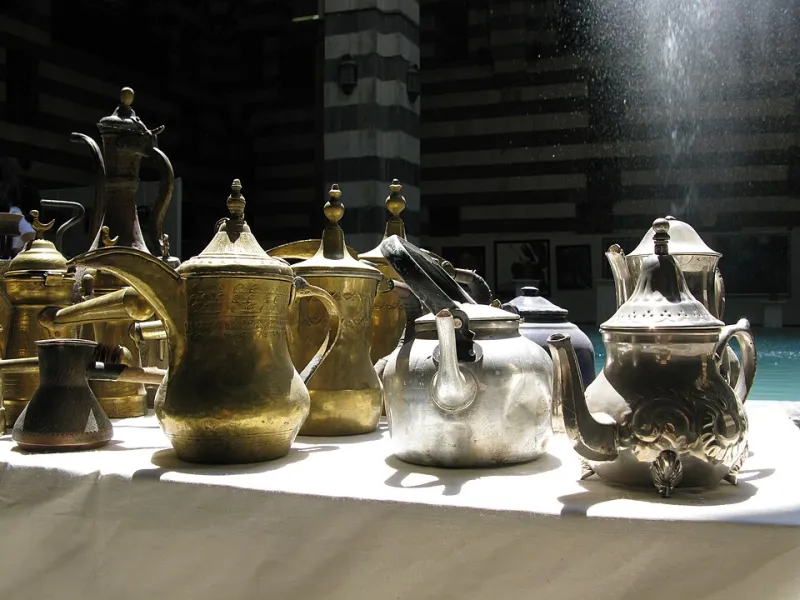
Photo: Vyacheslav Argenberg, CC BY 4.0, via Wikimedia Commons
There's a moment that happens in a lot of qahwa ceremonies — a pause, right after the small handle-less cup is filled, where nobody reaches for their phone. The host pours. The guest receives. There's eye contact, maybe a few words, and then quiet. In a country where people order espresso through a drive-through window without cutting the engine, that kind of stillness hits different.
Across the US, a growing number of Arab-American café owners, event hosts, and community organizers are introducing Americans to qahwa — the traditional Arabic coffee made with lightly roasted green or yellow beans, cardamom, saffron, and sometimes a whisper of rose water or cloves. But what they're really offering isn't just a new drink. It's an entirely different philosophy about what coffee is for.
More Than a Beverage, It's a Whole Ethos
In Gulf Arab culture especially, qahwa isn't something you make in a hurry. The dallah — that iconic long-spouted copper or brass pot — sits over low heat. The beans are roasted fresh. The grinding is rhythmic, almost meditative. And when guests arrive, the act of serving qahwa is itself a statement: you matter enough for me to slow down.
That hospitality framework is something Arab-Americans have been quietly carrying with them for generations. What's changed is that more of them are now building physical spaces around it. In cities like Houston, Dearborn, Detroit, New York, and Los Angeles, specialty qahwa bars and Arabic coffee pop-ups have started carving out a real niche — places where the ceremony is part of the menu.
Take spots like those popping up in Houston's diverse southwest corridor, where Khaleeji-style coffee houses serve qahwa alongside dates and cardamom sweets in settings designed to feel like a majlis — the traditional Arab sitting room built around conversation and community. Or the pop-up events in Brooklyn where first- and second-generation Arab-Americans host qahwa circles that blend cultural education with straight-up good vibes.
"We're not just selling coffee," one Houston-based café owner explained in a recent community feature. "We're selling the idea that you're worth an hour of someone's undivided attention."
Gen Z Is Here for the Slow-Down
It might seem counterintuitive that a generation raised on instant everything would be drawn to a coffee ritual that takes time and intention. But spend five minutes on #qahwa TikTok and you'll see exactly why it resonates.
Gen Z is exhausted. The productivity-at-all-costs mentality that defined millennial hustle culture has left a lot of younger Americans quietly craving something more grounded. Wellness trends like slow mornings, analog hobbies, and "third place" culture (the idea that people need spaces that aren't home or work) have all exploded in popularity for the same reason. Qahwa fits right into that conversation.
There's also a sensory richness to the experience that plays well on social media, even if the actual ritual is about putting the phone down. The deep golden color of the brew, the steam rising from a dallah, the geometric patterns on a traditional serving tray — it's visually compelling in a way that a paper cup with a sleeve just isn't.
Creators like @qahwamornings and various Arab-American lifestyle accounts have racked up serious engagement just documenting the preparation process. Comments sections are full of non-Arab Americans asking where they can try it, what the spices are, and how they can recreate it at home.
The Social Architecture of a Cup
What's worth understanding about qahwa culture — and what gets lost when it's reduced to an aesthetic — is the social structure built around it. In traditional settings, qahwa is served in rounds. The host keeps pouring small refills until the guest gives a little shake of the wrist to signal they're done. That small gesture, called a hazza, is a whole communication system in miniature.
The conversation that happens over qahwa isn't small talk. It's storytelling, conflict resolution, business negotiation, and family bonding — sometimes all in the same sitting. The Bedouin roots of the tradition go back centuries, to a time when welcoming a stranger with coffee was a gesture of protection and peace.
Arab-American hosts who bring these ceremonies into American spaces often find themselves explaining this context to curious guests, and that's kind of the point. It's cultural exchange that happens naturally, without a lecture, just through the act of sitting together.
"When I pour qahwa for someone who's never had it before, I always tell them a little bit about what it means," says one community organizer in Dearborn who hosts monthly qahwa circles. "By the time they finish their second cup, we're usually talking about their grandparents' traditions too. That's the magic of it."
Beyond the Specialty Coffee Trend
American coffee culture has been on a journey for years — from diner drip to Starbucks dominance to the third-wave specialty movement that made single-origin pour-overs a thing. Qahwa represents something that doesn't fit neatly into any of those chapters, because its value proposition isn't really about the coffee itself.
You're not paying for a specific flavor profile or a rare bean from a particular farm. You're paying — or being gifted — an experience of presence. The flavor is part of it, sure. Qahwa has a gentle, herbal warmth that's genuinely unlike anything else. But the cup is almost secondary to the context in which it's shared.
That's a harder sell in a market trained to evaluate beverages on taste and caffeine content. But the Arab-Americans building these spaces seem less interested in competing with Blue Bottle or Stumptown and more interested in offering something those places simply can't: a room where slowing down is the whole point.
A Tradition Finding Its American Moment
None of this is new, of course. Arab-American communities have been gathering over qahwa in homes and community centers for as long as they've been in the US. What's shifting is visibility — and appetite. A broader American audience, hungry for meaning in their daily rituals and genuinely curious about Arab culture beyond the headlines, is starting to find its way to the dallah.
For Arab-Americans, that's a complicated but often welcome thing. Seeing a tradition you grew up with get appreciated — not appropriated, but genuinely engaged with — hits differently than watching it get flattened into a trend. The café owners and hosts doing this work seem keenly aware of that line.
The goal, as one New York-based qahwa pop-up host put it, is simple: "Come sit. Have coffee. Let's actually talk."
In 2025, that might be the most radical offering in any city in America.