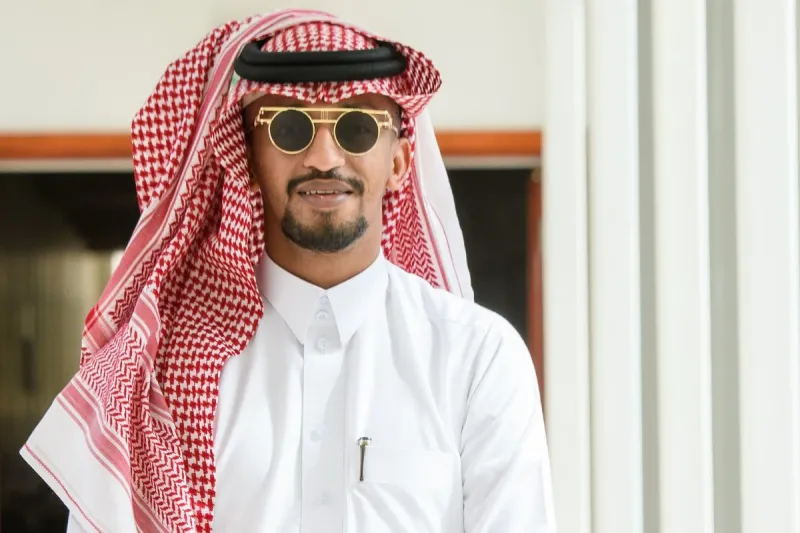
From the Souk to the Runway: How Arab Designers Are Dressing the World
Photo: EngiZe, CC BY-SA 4.0, via Wikimedia Commons
Not long ago, if you asked the average American fashionista to name a Middle Eastern designer, you'd probably get a blank stare. Fast forward to today, and names like Rami Al Ali, Elie Saab, and a growing roster of younger talents are showing up in the pages of Vogue, on red carpets across Hollywood, and yes, even in your favorite online boutiques. Something is shifting — and it's not just hemlines.
Arab fashion is having a full-on moment, and honestly, it's been a long time coming.
More Than Modest: Rethinking What Arab Fashion Actually Means
Let's clear something up right away. When people in the US hear "Arab fashion," a lot of them immediately picture modest clothing — flowing abayas, hijabs, and covered silhouettes. And while modest fashion is absolutely part of the story (a hugely important part, actually), it's only one chapter in a much bigger book.
Arab designers are working across every style category imaginable. There's high-octane couture dripping in hand-embroidered detail. There's streetwear pulling from Levantine graphic traditions. There's sustainable slow-fashion rooted in Moroccan weaving techniques that have been passed down for generations. The range is genuinely staggering once you start looking.
What ties it all together is a deep respect for craft. Many Arab designers grew up watching family members work with their hands — stitching, weaving, embroidering. That intimacy with material and technique shows up in the work in ways that mass-produced Western fashion simply can't replicate.
The Social Media Effect: Instagram Didn't Just Help, It Transformed Everything
Here's the thing about the fashion industry: it used to be almost entirely gatekept by a small group of editors, buyers, and PR firms based in Paris, Milan, and New York. If you weren't in their orbit, you basically didn't exist on the global stage.
Social media blew that model up. And Arab designers were some of the savviest early adopters of using platforms like Instagram and TikTok to build direct relationships with customers worldwide.
Designers like Faiza Bouguessa (Dubai-based, with a global following that rivals many European names) or the Lebanese-American label Rami Kashou have built entire brand identities through visual storytelling online. Their feeds aren't just product shots — they're cultural narratives. You see the inspiration, the process, the heritage behind each piece. For a US audience hungry for authenticity, that kind of transparency is magnetic.
TikTok, in particular, has been a game-changer. Short-form videos showing the making of a hand-beaded kaftan or the dyeing of natural fabrics using traditional North African methods rack up millions of views. People aren't just buying a dress — they're buying a story, a connection to something that feels genuinely different from the fast-fashion cycle they're exhausted by.
Challenging the Beauty Standard, One Collection at a Time
One of the most quietly radical things happening in Arab fashion right now is the challenge to Western beauty norms. For decades, the global fashion industry has operated on a pretty narrow definition of what beauty looks like — and it rarely centered women who wore hijabs, had olive or darker skin tones, or dressed in ways that didn't conform to Eurocentric ideals.
Arab designers, particularly those who are themselves from the region or from Arab-American communities, are actively redesigning that standard. Modest fashion lines are being built not as a compromise but as a first-class aesthetic choice. Campaigns feature diverse models who look like actual human beings from the region. The color palettes pull from desert landscapes, Mediterranean coastlines, and North African markets rather than the default neutrals that dominate Western luxury.
For Muslim women in the US — a significant and often underserved consumer group — this visibility is enormous. Brands like Vela, Louella, and Haute Hijab have found loyal American audiences not just because they fill a practical need, but because they finally make those customers feel seen.
Sustainability Rooted in Tradition
Here's something that might surprise you: many of the most sustainable practices in fashion today aren't innovations at all. They're ancient techniques that Arab and Middle Eastern artisans have been using for centuries.
Handloom weaving in Egypt. Natural indigo dyeing in Morocco. Intricate zardozi embroidery passed between generations of craftswomen in the Levant. These methods are slow by design. They use minimal waste. They support local economies and keep traditional knowledge alive.
As the US market increasingly demands sustainable options — and grows more skeptical of greenwashing from big brands — Arab designers who have always worked this way are finding that their values align perfectly with where conscious consumers want to go. It's not a marketing strategy. It's just how the work has always been done.
What's Next: Arab Fashion in the American Mainstream
Major US retailers are starting to notice. Net-a-Porter has significantly expanded its Arab designer offerings. Nordstrom has stocked modest fashion lines from regional brands. And New York Fashion Week has seen a steady increase in Arab designers either showing collections or being featured in influential presentations.
But perhaps the most exciting frontier is the next generation of Arab-American designers who grew up straddling both worlds. They're fluent in American pop culture and deeply connected to their heritage. They're not translating Arab aesthetics for a Western audience — they're creating something entirely new that belongs to both spaces simultaneously.
That hybrid creativity? That's where things get really interesting. Keep your eyes on this space, because Arab fashion isn't just arriving on the global stage. It's already redecorating the place.